
Dangote petroleum refinery: The opening of an industrial giant's capital, a turning point for African finance | Economy | Finance | Industry | Investment
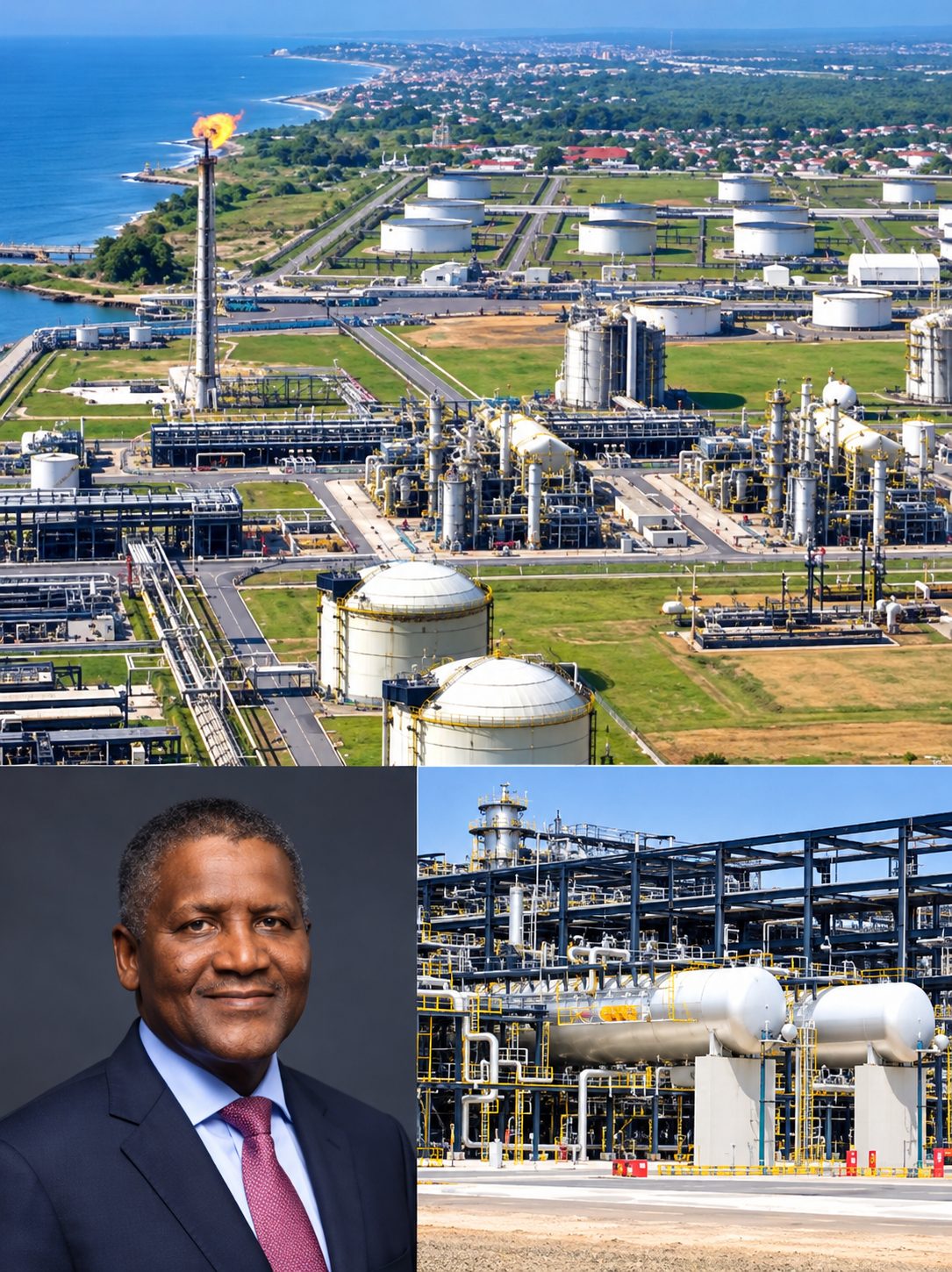
With an initial public offering potentially raising up to $2.1 billion, Dangote Petroleum Refinery aims to broaden its shareholder base, finance its industrial ambitions, and open new avenues for grassroots African investment. Yet beyond the financial dimension, this transaction raises a strategic question: Can the continent now mobilise its own capital to finance its major infrastructure projects?
A stock market transaction with continental ambitions
On 14 September 2026, Dangote Petroleum Refinery and Petrochemicals opened a new chapter in its development with the launch of an initial public offering (IPO), designed to allow new investors to acquire a stake in the refinery.
The transaction involves 4.1 billion ordinary shares offered at a unit price of 525 naira. It targets an initial fundraise of approximately $1.6 billion, with the potential to reach nearly $2.1 billion depending on the offering terms and the exercise of available options.
The enterprise valuation is estimated at approximately $49 billion, according to guidance provided at the launch of the transaction.
By its scale, this initial public offering ranks among the most significant financing operations ever undertaken on African capital markets. It reflects an ambition to bring the financing of major industrial infrastructure closer to the financial resources held by retail investors, corporations, and institutional investors.
The stated ambition of the group is to look beyond the traditional circle of large investors to broaden equity ownership in one of the continent’s most critical industrial projects.
Investing in an industrial giant from 5,250 naira
One of the most notable features of this transaction is its minimum investment threshold.
With the share price set at 525 naira, the minimum subscription of ten shares represents an investment of 5,250 naira, or approximately four dollars at the prevailing exchange rate.
This financial accessibility is a cornerstone of the strategy to mobilise retail investors. The objective is to enable a broader public to participate in financing a strategic industrial asset, rather than reserving this opportunity exclusively for investors with substantial capital.
The process relies notably on digital channels, banks, and authorised subscription platforms in Nigeria. This approach is intended to streamline the investment process and broaden the potential shareholder base.
The initiative holds particular economic relevance: it seeks to channel private savings into productive capital capable of underpinning the expansion of an industrial corporation.
However, an accessible entry price should not be confused with an absence of risk. Purchasing shares exposes investors to equity price fluctuations, the future operating performance of the company, and decisions regarding dividend distribution.
A refinery at the core of Nigeria's energy ambitions
The IPO comes as the Dangote refinery plays an increasingly vital role in the Nigerian and regional energy landscape.
Located near Lagos, this industrial facility has an announced processing capacity of 700,000 barrels of crude oil per day. Commissioned in 2024, it represents a major investment in the local transformation of hydrocarbons and the development of domestic fuel production capacity.
Its ramp-up serves several economic objectives: reducing reliance on refined petroleum product imports, improving fuel availability, strengthening domestic industrial capacity, and developing regional commercial outlets.
The group also aims to expand the refinery’s crude processing capacity to approximately 1.4 million barrels per day by 2029.
Such an expansion requires additional capital expenditure in industrial equipment, logistics infrastructure, storage capacity, and distribution channels.
The equity offering thus emerges as a complementary financing mechanism alongside the company's retained earnings and institutional debt facilities.
Beyond the immediate capital raise, this transaction could help establish a more lasting relationship between the industrial group and capital markets.
Botswana, a gateway to Southern African investors
One of the most compelling dimensions of this transaction lies in its extension beyond the Nigerian market.
Challenges related to cross-border regulatory procedures, opening investment accounts, and subscription modalities have historically highlighted the limitations of securing direct access to capital markets in other African jurisdictions.
To widen regional participation, a structure based on depositary receipts was designed for investors across several Southern African markets, notably within the Southern African Development Community (SADC) zone.
Botswana is slated to host the listing of depositary receipts backed by refinery shares on the Botswana Stock Exchange.
According to information released on 15 October 2026 by Botswana's regulatory disclosure authorities, Access Bank Botswana acts as custodian and issuer of the Botswana Depository Receipts (BDRs). The planned facility could represent a maximum amount of up to $500 million.
These instruments are structured to allow eligible investors to gain economic exposure to the underlying shares through the domestic market without necessarily having to establish an investment account directly in Nigeria.
Trading of these instruments in Botswana is scheduled to commence on 14 December 2026.
This initiative illustrates an avenue of development for African capital markets: facilitating cross-border investment through financial instruments tailored to the domestic regulatory frameworks and market infrastructure of each exchange.
However, it does not imply that all African investors automatically have access to the offering. Participation remains subject to local jurisdictional rules, eligibility criteria, and approved distribution mechanisms.
Subscription period extended to 27 October 2026
Initially scheduled to close on 13 October 2026, the public offering was granted a two-week extension.
In a notice released on 12 October, the refinery announced that the subscription period would remain open until Tuesday, 27 October 2026, following approval from the Securities and Exchange Commission (SEC), Nigeria’s capital markets regulator.
The company justified this decision by citing strong demand from eligible investors across Nigeria and other jurisdictions, as well as the need to pursue initiatives intended to broaden access to the transaction.
The additional window is notably expected to facilitate distribution channels, streamline the rollout of depositary receipt mechanisms, and provide prospective investors more time to complete customer verification and account opening procedures.
This extension underscores an important reality: having an attractive investment offering is not sufficient on its own to guarantee genuinely continental participation.
Operational channels must also be in place to enable investors across different jurisdictions to access the offering under clear, robust regulatory conditions.
The success of the initiative will therefore depend as much on the economic appeal of the refinery as on the capacity of market intermediaries to make the investment accessible across multiple African markets.
From African savings to the financing of African infrastructure
The Dangote transaction goes beyond the mere question of equity ownership in an oil-refining asset. It places the role of African domestic savings at the centre of the debate on financing industrial development.
The continent faces massive funding requirements in energy, industrial, logistics, and digital infrastructure. However, a significant portion of these investments requires long-term capital, which can be challenging to raise when corporations depend exclusively on public budgets, commercial bank loans, or foreign direct investment.
Capital markets provide an additional mechanism: pooling resources from a large base of retail and institutional investors and deploying them toward enterprises capable of generating sustained economic activity and revenue.
Viewed in this light, the partial divestment of equity in the Dangote refinery represents a milestone case study for several reasons.
First, it seeks to mobilise an expanded retail investor base.
Second, it highlights the potential of digital platforms in distributing retail financial products.
Third, it tests cross-border market linkages across multiple African exchanges to facilitate regional investment flows.
Finally, it raises the strategic question of African retail savers participating in the ownership of industrial assets that form the backbone of the continent’s economies.
These mechanisms do not automatically guarantee a more equitable distribution of wealth or the sustainable democratisation of productive assets. Their ultimate impact will depend on financial disclosure standards, investor protection frameworks, secondary market liquidity, and the issuer's ability to deliver sustainable operational performance.
Nonetheless, the initiative opens a strategic debate on the methods required to bridge the gap between available domestic savings and the long-term capital requirements of African economies.
An opportunity for economic sovereignty, but also a test of financial maturity
Economic sovereignty is not limited to possessing natural resources or housing industrial plants within national borders. It also implies the capacity to fund strategic capital investments, structure competitive market leaders, and retain a significant share of value creation domestically.
From this perspective, the Dangote initiative warrants careful analysis.
It seeks to channel private savings into the capital structure of a critical industrial asset, while opening avenues for broader equity participation by African investors.
Yet several fundamental questions remain.
What percentage of the equity will ultimately be held by African retail investors following the transaction? To what extent will the proceeds raised support the announced industrial expansion programme? Can these depositary receipt structures be replicated on other African bourses? Above all, will the continent’s capital markets succeed in establishing durable conduits between household savings and the financing of productive, value-adding projects?
The answers to these questions will determine the true significance of the transaction beyond the headline capital raised.
The success of such an undertaking cannot be measured solely by the volume of capital secured. It must also be evaluated by the quality of corporate governance, reporting transparency, minority shareholder protections, and the broader economic spillover generated by the funded investments.
What lessons for Francophone Africa and Côte d’Ivoire?
For the economies of Francophone West Africa, particularly Côte d’Ivoire and fellow member states of the West African Economic and Monetary Union (UEMOA/WAEMU), the Nigerian experience raises a fundamental issue: how to reinforce domestic market-based mechanisms for corporate industrial finance.
The presence of a shared currency and a regional capital market centred on the Regional Securities Exchange (BRVM) provides an institutional framework for mobilising capital. However, the maturation of this mechanism depends on market depth, the volume of listed corporates, the participation rates of retail and institutional investors, and the diversification of available financial products.
The Dangote experience suggests several avenues of reform: lowering barriers to entry for retail investors, expanding financial literacy, developing digital distribution networks, and strengthening cross-border investment frameworks.
It also serves as a reminder that large-scale infrastructure projects need not be financed solely through sovereign debt or public balance sheets. Provided sound economic, regulatory, and financial fundamentals are established, equity offerings can serve as a vital complementary engine for capital growth.
For Côte d’Ivoire, whose industrial and energy ambitions require substantial long-term capital, these considerations are particularly timely. They apply equally to hydrocarbon storage and distribution logistics, agro-processing projects, manufacturing facilities, and logistics corridors.
The objective is not to duplicate the Nigerian model mechanically, but rather to identify structural mechanisms capable of channeling regional savings into productive real-economy assets.
Conclusion: The challenge of building African capital
The equity offering of Dangote Petroleum Refinery represents far more than a large-scale capital markets transaction. It serves as an experiment in pooling domestic savings around a strategic industrial asset and a test of African capital markets’ ability to operate beyond national borders.
The extension of the subscription window to 27 October 2026 and the deployment of depositary receipts targeting Southern African investors demonstrate that widening equity participation requires significant enhancements in cross-border financial infrastructure and regulatory convergence.
The real challenge now lies in the continent’s capacity to convert transactions of this nature into durable, repeatable mechanisms for development finance.
Africa possesses domestic savings, evolving capital markets, and massive industrial requirements. The central imperative is to connect these three dynamics more effectively, ensuring mobilised capital actively advances industrial transformation, value creation, and the long-term expansion of African corporate champions.
The free Gisement newsletter
Every morning, Africa’s mining, oil and energy headlines in your inbox.
Comments
To comment, please use the French edition of this article.