
InvestmentAnalysis
IMF–World Bank Annual Meetings in Bangkok: Africa demands faster disbursements
Caught between pledges of support and sluggish funding flows, African delegations made the actual pace of financing the common thread of their discussions with the Bretton Woods institutions. However, they left with more commitments in principle than concrete decisions.
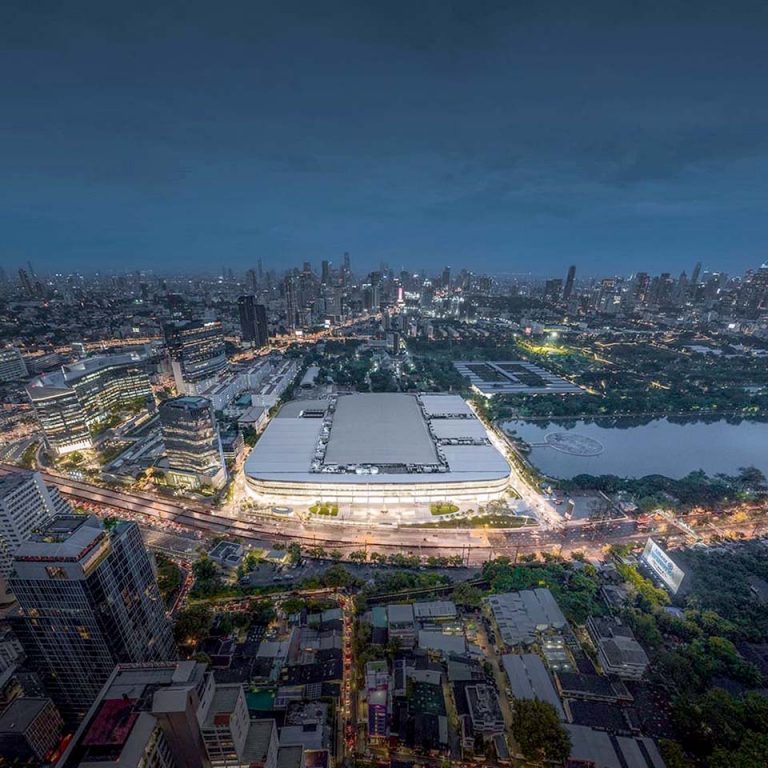
In October 2026, Bangkok hosted the Annual Meetings of the International Monetary Fund (IMF) and the World Bank Group. In the summit's corridors, one issue dominated the bilateral meetings of African delegations: the actual pace of disbursements. Funding announcements continue to mount, yet the money is still slow to reach the projects it is meant to serve. Cameroon formally pleaded for faster disbursements intended for development financing. Meanwhile, Mozambique, Gabon, Liberia, and Libya held numerous high-level meetings with leadership from both institutions.
The persistent gap between commitment and execution
For the continent's economies, the mismatch between promised aid volumes and their actual absorption remains a major cause for concern. Cameroonian authorities stressed the urgent need to streamline the delivery of resources mobilized for growth projects. For Yaoundé, approved financing that does not rapidly translate into operational liquidity loses a large share of its utility.
Madagascar provides a quantified illustration of these delays. On 12 October 2026, Madagascar's Minister of Economy and Finance, Dr Ramiarison Herinjatovo Aimé, held talks with Dr Ndiamé Diop, the World Bank's Vice President for Eastern and Southern Africa. The discussions revealed a disbursement rate of roughly 31% over the previous fiscal year. This level demonstrates just how difficult it remains to turn financial approvals into available resources on the ground.
Faced with these bottlenecks, the World Bank proposed technical support. This is intended to simplify procedures and remove administrative, land-related, and environmental hurdles that hold back project implementation. However, the institution set a clear limit. The preparation of the upcoming budget support, in the form of a Development Policy Operation (DPO), will remain conditional on the quality and effective implementation of structural reforms. Technical facilitation is therefore no substitute for the requirement of conditionality.
Energy and mining: prime territory for conditionality
On a sectoral level, financing basic infrastructure—and energy in particular—appears inseparable from the governance requirements of multilateral donors. Antananarivo advocated for accelerated energy investments in order to sustainably lower electricity generation costs. Several files are receiving close attention:
the recovery and governance of Jirama, the national water and electricity utility;
the Volobe hydroelectric project, for which the International Finance Corporation (IFC) and the World Bank reaffirmed their interest, although the financial arrangement has yet to be finalized;
the reform of the mining framework, identified as a priority undertaking to be consolidated;
the management of telecommunications and the Road Maintenance Fund.
Added to these structural imperatives is climate pressure. Malagasy authorities presented a government action plan to tackle risks linked to the El Niño phenomenon, provisionally valued at $220 million. They also requested more accessible credit terms for affected businesses.
Intense financial diplomacy, but still uncertain outcomes
Beyond sectoral reforms, high-level meetings followed in rapid succession on the sidelines of the Thai summit. Mozambique's Minister of Economy and Finance was received by IMF Deputy Managing Director Bo Li, as was the Governor of the Central Bank of Libya. Delegations from Gabon and Liberia also took part in the Meetings' proceedings.
These discussions reflect the determined stance of African governments to make their financial demands heard against a constrained macroeconomic backdrop. Yet the overall outcome must be put into perspective. Available information points primarily to ongoing negotiations and commitments in principle. No revisions to disbursement mechanisms and no debt cancellations were enacted at this stage.
Bangkok therefore served primarily as a forum. It brought to light a long-standing malaise: that of a continent securing financing on paper, but struggling to see it materialize in time. It remains to be seen whether the promised technical support will suffice to bridge this gap, or if conditionality will continue to slow the pace.
Sources
- Mozambique Finance Minister meets IMF Deputy Managing Director Bo Li in Bangkok (CLUB OF MOZAMBIQUE)
- Ministry of Finance & Development Planning (MFDP Liberia)
- The Governor of the Central Bank of Libya meets with the Deputy Managing Director of the International Monetary Fund on the sidelines of the Annual Meetings. (وكالة الأنباء الليبية)
- Assemblées annuelles du FMI et de la Banque mondiale (Bangkok) (budget.gouv.ga)
- Afrique: Banque mondiale - Vers l'accélération des financements et le déblocage des grands projets (AllAfrica.com)
- Financement du développement : Le Cameroun plaide pour une accélération des décaissements à Bangkok (Minepat)
The free Gisement newsletter
Every morning, Africa’s mining, oil and energy headlines in your inbox.
Comments
To comment, please use the French edition of this article.