
EnergyAnalysis
Burundi: Anzana Electric commits $1.4bn to connect eight million users
Burundi has handed over half of its distribution network to Weza Power, a subsidiary of the Anzana Electric group, for twenty-five years. This unprecedented financial structure on the continent is designed to avoid adding to public debt. However, amid foreign exchange shortages, insufficient generation, and scattered settlements across the hills, execution is set to be formidable.
It is an extraordinary contract for a country with a GDP estimated at $3.36 billion: the investment accounts for roughly 42% of it. Signed on 15 October 2026 in Bujumbura, the public-private partnership with Weza Power is described by the US Department of State as the largest investment in Burundi's history. According to its promoters, it also establishes the first new private, nationwide electricity distribution concession in Africa in decades.
A network split in two
Over twenty-five years, Weza Power will invest in, expand, and operate distribution across approximately half of the national territory. The programme plans to build or upgrade 52,000 kilometres of lines and connect more than 1.2 million households and businesses. The public utility REGIDESO retains the other half of the country as well as the national transmission grid.
The stated goal: to increase grid access from around 15% today to more than 50% by 2030, with an eventual government target of 70%. Baseline figures vary depending on the source, however: the Ecofin agency cites an overall access rate between 20% and 25.9%, whereas Washington reports 12%. The project also promises more than 2,000 direct jobs and over 30,000 indirect jobs.
A blended financial structure
At the core of the arrangement is blended finance, combining private commercial capital with concessional funds from development institutions, without adding to Burundi's public debt. The list of partners is extensive: the World Bank's ASCENT programme, the IFC (SFI), the Multilateral Investment Guarantee Agency (MIGA), the African Development Bank (AfDB), the US DFC, Gridworks, the US USTDA, the Norwegian agency NORAD, and other bilateral and climate donors.
Each stakeholder plays a distinct role. The IFC co-developed the project with Anzana. Gridworks, a subsidiary of British International Investment, is a shareholder in Anzana. MIGA provides political risk insurance. Upstream, the DFC had already committed $3.1 million in technical assistance back in 2024 to accelerate Weza's development.
Finally, the contract includes tariff and performance obligations intended to protect consumers and guarantee investors the necessary long-term stability.
Crucially, the exact breakdown between equity, commercial debt, concessional loans, and grants has not been made public. The $1.4 billion figure represents a fundraising target over the life of the programme, rather than funds already disbursed.
Anzana, an established player
The group is not treading on unfamiliar ground. Present in Burundi since 2018 via Songa Energy, it commissioned the Upper Ruvyironza hydroelectric plant (1.65 MW) in 2025 and is developing a second 9 MW site at Upper Mulembwe. In February 2025, these two projects secured $35 million in financing from the regional bank TDB, with Anzana as the sole shareholder.
First challenge: no power without generation
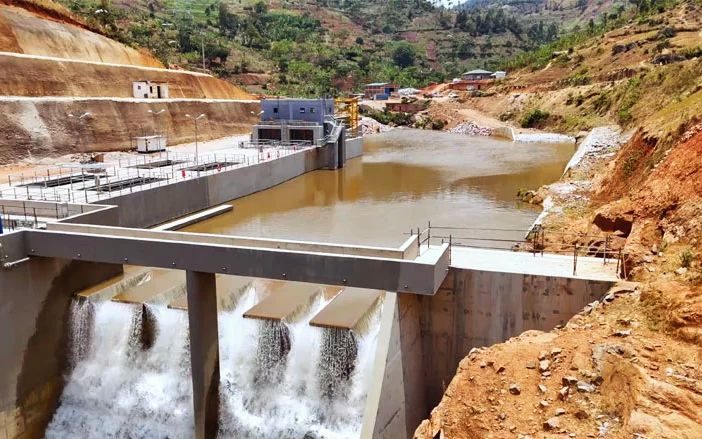
This is the project's major limitation. The concession covers distribution: it adds neither generation nor transmission capacity. Yet the country's installed capacity tops out at around 183 MW, according to Energy Minister Hassan Kibeya.
Connecting 1.2 million customers without increasing generation risks multiplying the number of households hooked up to a grid that delivers little electricity. Burundi already experiences daily rolling blackouts, often lasting more than two hours.
The mining ambitions also suffer as a result. The government presents this network as leverage for domestic critical mineral processing. Yet a nickel refinery at Musongati alone could require 100 to 200 MW—equivalent to the country's entire national capacity. The mining project, awarded in March 2026 to US-based Lifezone Metals under a 14-month exclusivity period, will therefore have to rely on new power plants.
Second challenge: electrifying the hills
Burundi is one of the most densely populated countries in Africa, but its rural population lives scattered across hilly terrain, far from urban centres. In 2023, only 2% of rural residents had access to electricity.
Stringing 52,000 kilometres of lines across this topography implies lengthy, costly construction works exposed to severe weather. Repeated flooding in recent years, which devastated parts of Bujumbura, serves as a reminder of the vulnerability of infrastructure. The initial timeline already reflects the difficulty: in 2024, Anzana planned to connect 300,000 rural residents as early as 2025 and 9 million people by 2030; that target has now been revised to 8 million.
Third challenge: customer solvency and foreign exchange risk
A private concessionaire must be paid. Yet the macroeconomic environment is strained. The African Development Bank forecasts inflation of 30.9% in 2026, driven in particular by deficit monetisation. The IMF considers foreign exchange reserves, standing at just $214 million, to be one of the greatest threats to growth.
The problem is structural: Weza will collect its revenues in Burundian francs, but will need to service dollar-denominated debt and import cables, transformers, and meters. Without robust foreign exchange risk mitigants, the model could become fragile. This is precisely where MIGA guarantees and concessional funds become essential.
Fourth challenge: a two-headed governance structure
The country will now have two distributors. Coordination with REGIDESO, which retains transmission and the other half of the distribution grid, will be critical. Past precedent warrants caution: in 2018, REGIDESO and private producer Interpetrol clashed over payment delays and disputed tariffs.
A test for the entire continent
The project forms part of Burundi's national energy compact under Mission 300, the World Bank and AfDB initiative to connect 300 million Africans by 2030. If successful, it could serve as a blueprint for countries seeking to electrify without taking on sovereign debt. Anzana is already preparing similar approaches in Zambia and the DRC.
However, success will not be measured by the number of kilometres of lines strung. It will hinge on three conditions: power generation keeping pace, tariffs affordable for rural households, and a currency stable enough to retain private investors. Without these, Burundi risks having wires without power.
The free Gisement newsletter
Every morning, Africa’s mining, oil and energy headlines in your inbox.
Comments
To comment, please use the French edition of this article.