
Kodal Minerals: West African lithium beyond Mali
A year after extracting its first tonnes of spodumene from southern Mali, Kodal Minerals is crossing the border. On 19 October 2026, the small London-listed producer signed an agreement to acquire up to 80% of a lithium licence in Ghana, 75 km from Accra. Behind this initial step, a broader strategy is taking shape.
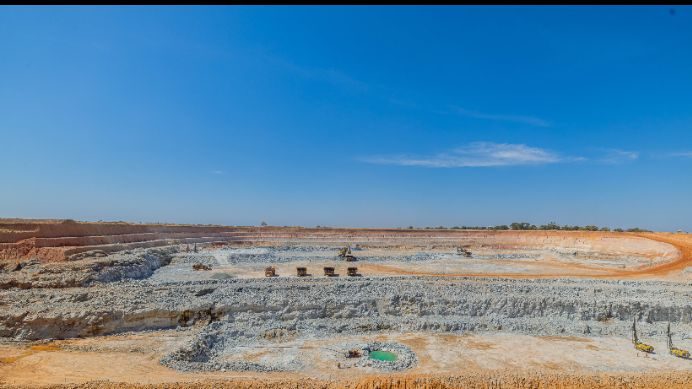
Bougouni, the launching pad
Bougouni is now a cash-generating engine, and it is paying for the expansion. In the third quarter of 2026, the mine in southern Mali, located about 180 km from Bamako, produced 27,234 dry tonnes of spodumene concentrate grading 5.29% lithium oxide. The year-to-date total reached 80,429 tonnes, and Kodal maintains its target of 105,000 to 115,000 tonnes for 2026, at a unit cost of $600 to $610 per tonne.
The first four shipments totalled 93,322 tonnes and approximately $142.8 million in revenue (Share Talk). The loan from Hainan Mining was repaid, clearing the project of any external debt. The concentrate is trucked down to the Ivorian port of San Pedro, then shipped to China.
Yet the start-up was bumpy. Produced as early as February 2025, the initial concentrate remained stranded on site for months. Bamako was reviewing the pricing mechanism to ensure that sales to Hainan were conducted at market rates. "Our buyer wants to buy, but we cannot export," Bernard Aylward summed up at the time (Mining Weekly). The first shipment did not leave San Pedro until November 2025.
One critical detail influences the entire strategy: Kodal does not control Bougouni. The operating company, Les Mines de Lithium de Bougouni SA (LMLB), is 65% owned by Kodal Mining UK (KMUK) and 35% by the Malian State. KMUK itself is 51% owned by China's Hainan Mining and 49% by Kodal. Kodal's ultimate economic interest therefore stands at around 32%. The $142.8 million in revenue belongs to the project, not the company.
Asamankese, first bridgehead outside Mali
The only lithium target named to date is in Ghana. On 19 October 2026, Kodal signed a binding agreement with Ghanaian firm GH Geo-Consult Limited (GGCL) to earn into up to 80% of the Asamankese project (Proactive Investors). The licence covers 156 km² in the Eastern Region, about 75 km from Accra.
The choice is by no means a geological coincidence. Asamankese lies within the Birimian belt, the same basement rock that hosts Bougouni. Two prospects are the primary focus: Amantra, with a pegmatite system mapped over approximately 3 km, and Nfranta, with nearly 4 km of cumulative strike length. Initial rock chip samples returned up to 2.49% lithium oxide, with 95 of the 164 samples grading above 1%. Historical sampling reportedly reached 3.02%.
Caution is warranted, however: these are surface chips. They reveal nothing about thickness, depth, or grade continuity. No resource estimate exists. Kodal points to "similarities" with Bougouni's early stages, but only drilling will tell.
Beyond Ghana, the company remains vague. It refers to "other regional markets" without naming specific licences. Its historical footprint in Côte d'Ivoire is gold-focused: Dabakala, a concession of around 300 km², and Korhogo in the north. None of these assets has been presented as a lithium target.
Financing: funding the venture without dilution
Kodal intends to finance its expansion using existing cash and Bougouni's cash flows, without raising fresh equity. This is the commitment repeatedly stated by Bernard Aylward to Reuters. For an AIM junior accustomed to capital raises, this message matters as much as the licence itself.
The entry cost is modest. Kodal paid $300,000 for its initial 10%, including a $50,000 exclusivity fee. The subsequent stages are optional: the company can halt expenditures at any stage while retaining the interest already earned. The entire process represents at least $13 million over five years.
The structure is clever: it caps immediate risk at a few hundred thousand dollars. But it shifts the real question. Bougouni's cash flow flows first to LMLB, then to KMUK—controlled by Hainan—before making its way up to Kodal. The project repaid the Hainan loan and made an initial repayment to KMUK in July 2026. The pace of distributions to Kodal, however, remains little detailed publicly.
Bougouni also has its own requirements. A Phase 2 involving a flotation plant is under study, with an updated feasibility study expected in late 2026 prior to any investment decision. Should both initiatives require cash simultaneously, capital allocation will be tight.
Timeline: five years to turn a licence into a deposit
The first test will come before the end of 2026: Kodal has committed to reconnaissance diamond drilling at Asamankese by then. The rest stems from the contractual earn-in terms. The dates below are indicative, calculated from the signing date assuming each stage progresses without delay.
1. Late 2026: initial drill holes at Amantra and Nfranta; updated feasibility study for Bougouni Phase 2.
2. Late 2026: Bougouni must deliver between 24,600 and 34,600 tonnes in the fourth quarter to meet its annual target.
3. Circa April 2027: completion of Stage 1: $1.25m spent, Kodal at 30%.
4. Circa 2029: completion of Stage 2: maiden resource estimate, Kodal at 60%.
5. Circa 2031: completion of Stage 3: definitive feasibility study, Kodal at 80%.
An administrative step precedes all this. GGCL must apply to Ghana's Minerals Commission to transfer the prospecting licence to the joint venture. To date, no timeframe has been provided for this approval.
The risks: Bamako, transport corridors, and Accra
Kodal's primary risk does not lie in Ghana but in Mali, where all its revenue originates. The 2023 mining code increased the State's share of revenue and eliminated tax exemptions. It was this framework that mandated the State's 35% stake in LMLB and delayed initial exports by several months in 2025.
The operating environment remains fraught for foreign investors. In late October 2025, the junta cancelled more than 90 foreign-held exploration contracts, citing non-compliance with the revised code. Barrick only regained control of its Loulo-Gounkoto complex following a protracted standoff that concluded in late 2025. In January 2026, Bamako created a ministerial-level position to oversee the entire mining sector.
Security represents the other major threat. On 22 August 2025, motorcycle-borne assailants attacked Bougouni, killing a security guard; military presence was subsequently reinforced. Since September 2025, JNIM, an al-Qaeda affiliate, has been attacking fuel convoys arriving from Côte d'Ivoire and Senegal. Landlocked Mali imports roughly 95% of its fuel by road. Following coordinated attacks on 25 April 2026, Kodal assured that Bougouni had not been impacted. However, the mine relies on a single corridor: the road to San Pedro.
Ghana is not without its own hurdles. Since 10 March 2026, a sliding-scale royalty applies to lithium: 5% up to $1,500 per tonne, rising to 7%, 10%, and 12% above $3,200. The 2023 Green Minerals Policy also provides for a 30% state equity participation in new projects. Furthermore, the precedent set by Ewoyaa offers a cautionary tale: the lease signed in 2023 was only ratified by Parliament in March 2026.
Then there is commodity price risk. Spodumene has rebounded, from $1,681 per tonne SC6 equivalent for Bougouni's second shipment to around $2,330 for the fourth. Yet the market has previously demonstrated that it can shed over 80% in two years. A less profitable Bougouni translates directly to a less funded Asamankese.
The West African lithium race
In three years, West Africa has transitioned from geological promise to producing region, with Mali leading the charge. Goulamina, operated by China's Ganfeng alongside a 35% Malian State interest, has been in production since December 2024. Its first phase is designed for 506,000 tonnes of concentrate per year, with a target of one million tonnes. By comparison, Bougouni is a junior sibling, producing roughly five times less volume.
In Ghana, Atlantic Lithium's Ewoyaa was slated to become the country's first lithium mine. Its lease was ratified on 20 March 2026, but the final investment decision remains subject to engineering, financing, and offtake agreements. Kodal is therefore entering a country where no commercial production has yet begun.
Côte d'Ivoire is also waking up. Atlantic Lithium reported a discovery in May 2025 across its Agboville and Rubino licences in the southeast. On 4 March 2026, the Council of Ministers granted two new lithium exploration permits. The Fraser Institute ranks the country first in West Africa for mining investment attractiveness. Crucially, Abidjan and San Pedro already serve as export gateways for Malian lithium.
Nigeria is pursuing a different route: downstream processing. Chinese investors have committed over $1.3 billion to domestic processing capacity since 2023. A $250 million plant commenced operations in July 2026 in Nasarawa State.
A common thread connects these projects: the capital and the buyers are Chinese.
London-listed Kodal is no exception, as Hainan off-takes all production from Bougouni.
Analysis: moving beyond Mali without leaving Mali
Kodal's strategy is primarily a risk hedge. Today, its entire valuation rests on one country, one partner, one buyer, and one corridor to the sea. Asamankese changes nothing in the short term, but it opens a second, English-speaking, stable jurisdiction outside the Alliance of Sahel States (AES).
The deal structure is conservative. A few hundred thousand dollars committed, optional stages, milestones tied to performance: Kodal is acquiring an option, not a mine. Notably, this would mark the first time the company holds operational control over a lithium project, having remained a minority stakeholder at Bougouni behind Hainan and the Malian State.
The underlying paradox lies elsewhere. To reduce its reliance on Mali, Kodal is depending on cash from Mali. Should Bamako tighten fiscal terms further, should the road to San Pedro close, or should spodumene prices slump, funding for Asamankese will slow down. For now, diversification remains anchored to the very risk it seeks to dilute.
Five indicators will determine whether the gamble succeeds:
• initial drill results at Amantra and Nfranta;
• licence transfer approval by Ghana's Minerals Commission;
• the pace of upstream cash distributions from KMUK to Kodal;
• the final investment decision on Bougouni Phase 2;
• security conditions along the Bougouni–San Pedro corridor.
One question remains unanswered: will Kodal name other lithium targets—notably in Côte d'Ivoire, where it already holds gold licences across the same Birimian belt? The company has not said.
The free Gisement newsletter
Every morning, Africa’s mining, oil and energy headlines in your inbox.
Comments
To comment, please use the French edition of this article.