
Tullow Oil, from 17 countries to Ghana alone: The forced retreat of an independent
Eight years ago, Tullow Oil held 87 licences across 17 countries. By 2026, the British company, weighed down by debt and hit by a $196.5 million tax setback, is refocusing its African ambitions on Ghana alone, according to Jeune Afrique. A retreat that highlights the fragility of independent oil companies and raises a fundamental question: who is taking over the assets they leave behind?
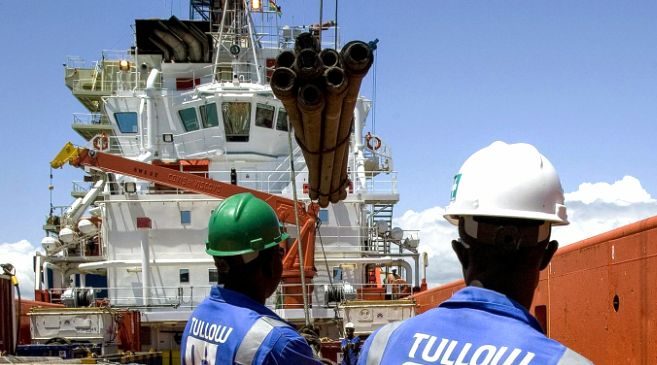
In total, these disposals yielded $347 million and transformed Tullow into an operating platform focused on Ghana. The bet rests on two major assets, Jubilee and TEN, whose licences were extended to 2040 and ratified by the Ghanaian Parliament.
The tax hammer blow
It is precisely in Ghana that the group suffered its heaviest blow. An International Chamber of Commerce (ICC) arbitral tribunal ruled that a $196.5 million corporate income tax assessment did not violate the company's petroleum agreements. The dispute involved business interruption insurance proceeds received between 2016 and 2019, and penalties, equal to 100% of the tax owed, were deemed outside the scope of contractual protections. (Tullow Oil Loses $196.5M Ghana Tax Arbitration +2)
The bill could double: Ghana's Minister of Finance, Cassiel Ato Forson, asserts that the tribunal upheld a total assessment of $393 million, penalties included. The market punishment was swift, with the stock plunging by up to 36% in London on 30 September. And the dispute is far from over: a second Ghanaian tax case, involving $190.5 million, is scheduled for hearing in 2027.
Fundamentals under strain
The paradox is striking. Operationally, Tullow is recovering: the free cash flow target for 2026 was raised to $170–$250 million, and a drilling contract was signed for a campaign of up to ten wells in Ghana in 2027–2028. Yet the balance sheet remains stretched: in the first half of 2026, the group posted a net loss of $101 million (58.1 billion FCFA), despite revenue rising to $496 million, with net debt standing at $1.4 billion at the end of June.
For analysts, the tax ruling was not unexpected, but the group's long-term survival remains contingent on significant debt reduction.
The single-country trap
Tullow's trajectory epitomises the structural vulnerability of independents. Lacking the financial cushion of the majors, they depend on oil prices, access to credit, and the fiscal stability of their host countries. By focusing on Ghana, Tullow gained clarity of purpose, but tied its fate to a single state that acts simultaneously as partner, customer, and tax creditor. The company is now staking its entire turnaround on Brent crude hovering around $90 and the Ghanaian government's ability to service its debts.
Relinquished assets, an African opportunity?
The question of the abandoned assets remains. The early indicators are telling: in Gabon, the national oil company stepped in; in Kenya, a local group took the reins. The retreat of foreign independents thus opens a window of opportunity for national companies and African operators to regain control of their resources. Yet they must still secure the capital, technical expertise, and financing required to develop these fields, which are often mature or complex.
Tullow's retrenchment is therefore not merely the story of a struggling company. It may well be symptomatic of a broader reshuffle across Africa's petroleum landscape, where resource sovereignty is becoming as much an economic issue as a political one.
The free Gisement newsletter
Every morning, Africa’s mining, oil and energy headlines in your inbox.

Comments
To comment, please use the French edition of this article.