
African championsProfile
Mamadou Sangafowa-Coulibaly, the minister plugging Côte d'Ivoire into the sun
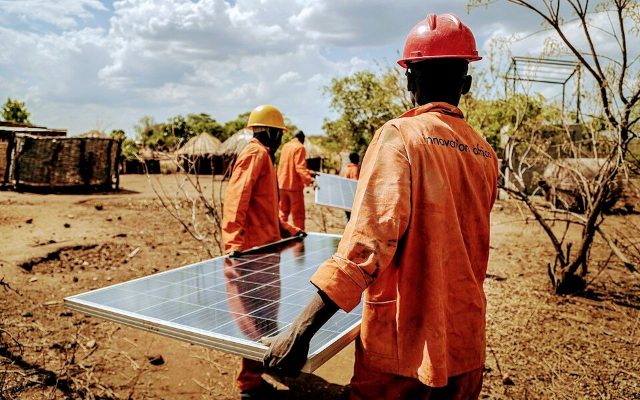
In two days, Mamadou Sangafowa-Coulibaly laid two foundation stones in northern Côte d'Ivoire: 50 MWc (MWp) at Katiola and 52 MWc at Tongon. The minister is running a programme meant to feed 1,262 MWc of solar power into the grid by 2030. Portrait of a man who wants to turn the savannah sun into a national asset.
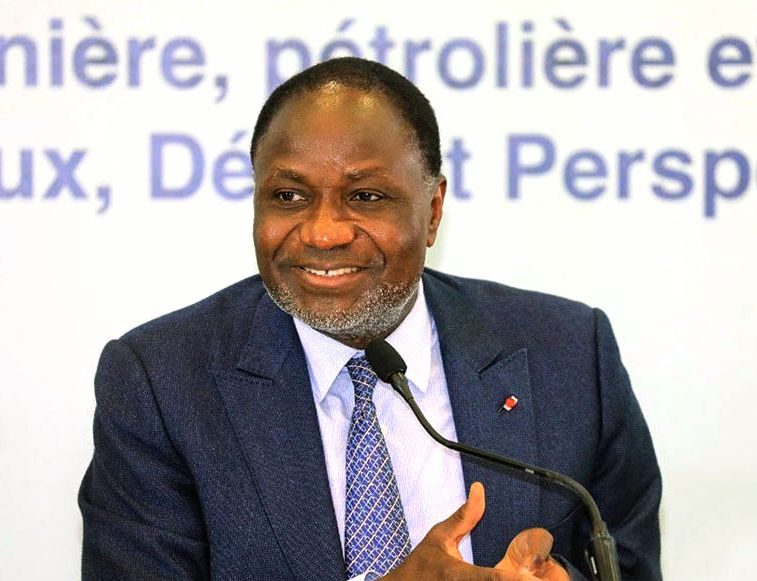
The son of Korhogo running Ivorian energy
Mamadou Sangafowa-Coulibaly was born on 10 December 1964 in Korhogo, the capital of the Poro region. Tongon, where he has just launched a power plant, lies in the same region. He studied at the Institut national supérieur de l'enseignement technique (INSET) in Yamoussoukro.
His first ministerial career was in agriculture, starting in February 2010. In February 2017, France made him a Commander of the Order of Agricultural Merit (Mérite agricole), a distinction rarely awarded to an African official. He is also vice-president of the Foundation for the Adaptation of African Agriculture to Climate Change (AAA). He also sat as a member of parliament for Korhogo during the 2016-2021 legislature.
In September 2019, he was the only minister to leave the government in the reshuffle. He returned on 20 April 2022, in the Achi II government, holding the Mines, Petroleum and Energy portfolio. He took up his duties only on 30 May, after completing a programme at Harvard with the head of state's consent.
The architect of a programme that has changed scale
The course is set by the head of state: 45% renewable energy in the electricity mix by 2030. In February 2025 in Ferkessédougou, the minister put the current share at around 31%.
Under his leadership, the solar ambition has almost doubled. In April 2024, he announced 678 MW of solar power for 2030. As of October 2026, the target stands at 1,262 MWc, spread across some fifteen plants.
The first results are in. Boundiali, the country's first solar plant, started up in 2024 and was then expanded to 80 MWc. Sokoro 2, in Ferkessédougou, has been in operation since July 2026 with 52 MWc. Kong and Bondoukou have had their foundation stones laid; Katiola and Tongon have just followed. Odienné, Niakara, Dabakala, Mankono and Soubré have been announced.
The arithmetic remains stark: 132 MWc in operation, roughly one-tenth of the target. More than 1,100 MWc remain to be connected in a little over three years.
The bet on private, and Ivorian, capital
His doctrine fits in one sentence, repeated at Katiola as at Tongon: the necessary resources "cannot be borne entirely by the public sector". The State signs agreements; developers design, finance, build and operate, generally for 25 years.
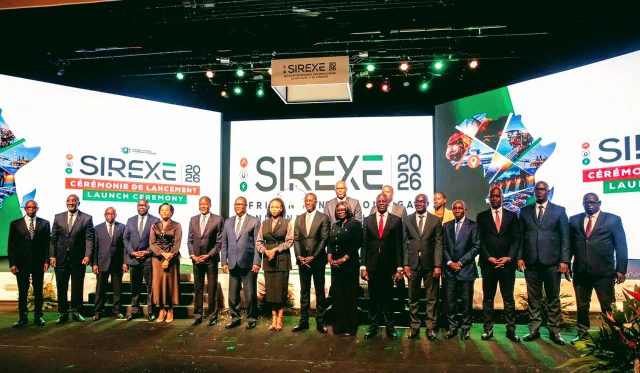
To attract that capital, his ministry has organised the International Extractive and Energy Resources Exhibition (SIREXE) since 2024. The first edition helped mobilise nearly 4,000 billion FCFA in investment contracts. The day after the exhibition, on 2 December 2024, he signed the Katiola agreement with Katiola Solar Power.
Tongon marks a shift. The developer, Tongon Solaire SAS, is a company with entirely Ivorian capital, behind an investment of 33 billion FCFA. Its chairman, Abdoul Soukpafolo Koné, sees it as proof that national companies have a place in major infrastructure. Other plants in the programme are backed by foreign developers, such as Infinity Power at Touba and Laboa, with the support of the IFC. By opening the door to an Ivorian player, the minister is sending a signal to investors across the continent.
A worksite first for local residents
The minister does not merely cut ribbons. At each foundation-stone ceremony, he sets social conditions, in front of the traditional chiefs and landholders whom he takes care to thank.
At Katiola, he demanded that the town's young people be served first and asked investors to create "genuine opportunities" for the local population. At Tongon, he reserved the roughly 500 construction jobs "for the daughters and sons of M'Bengué". Outside recruitment will come only if local skills are lacking. He also asked the developer to support young people and women, particularly women farmers.
The former agriculture minister speaks to the farmers of the North in their own language. At Katiola, he presented himself as having come to announce the plant to his "relatives". The message is clear: solar power must also be a rural employment policy.
The schedule, the first judge
Deadlines remain the programme's weak point, and the minister knows it. At the Katiola signing in December 2024, he had set commissioning fifteen months later, in the fourth quarter of 2026 at the latest. The foundation stone was finally laid only on 22 October 2026.
He acknowledges the inheritance frankly: "We inherited this project," he reminded the audience, referring to difficult negotiations. The file dates back to a memorandum signed in July 2021 by his predecessor, Thomas Camara, now mayor of Katiola. He said he had "taken good note" of the developers' commitment to meet the fifteen-month deadline.
Tongon is following the same slope. The August 2025 agreement aimed for commissioning before the end of 2027. Construction will not start until 2027, with entry into service by mid-2028 at the latest, a delay of around six months, with no public explanation.
What he still has to prove
Mamadou Sangafowa-Coulibaly has laid down the method: a quantified target, agreements with the private sector, local requirements and a place for Ivorian capital. For Gisement, this is the mark of a champion: an African leader who makes energy a lever of economic sovereignty.
Three tests await him between now and 2030:• Financing: that the private capital he considers indispensable is actually mobilised. Neither the electricity purchase tariffs nor the Katiola financing plan have been made public.
• Pace: going from 132 MWc in operation to 1,262 MWc in a little over three years.
• Local promises: they will be tested when recruitment takes place at Katiola and M'Bengué.
The verdict will come on the ground, when Katiola and then Tongon are commissioned, expected by mid-2028 at the latest.
The free Gisement newsletter
Every morning, Africa’s mining, oil and energy headlines in your inbox.
Comments
To comment, please use the French edition of this article.