
Oil shock: who is paying the fuel bill in Africa?
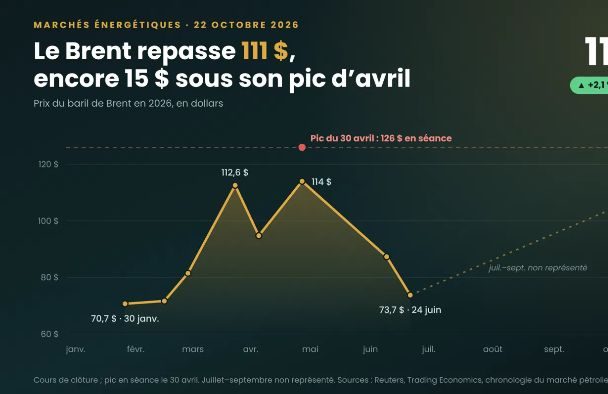
Brent crude closed at $115 a barrel on 27 October, up 80% on a year ago. With Hormuz under fire and the Red Sea being avoided, the shock is global, but it hits hardest in Africa. Among consumers, states, refiners and importers, the bill does not always land where one might expect.
Before the war between the United States, Israel and Iran broke out in late February, Brent was trading below $70. Eight months later, it is hovering around $117 on a weekly close. Iranian attacks on tankers in the Strait of Hormuz, Houthi strikes on Saudi facilities and Ukrainian drones hitting Russian refineries are compounding one another.
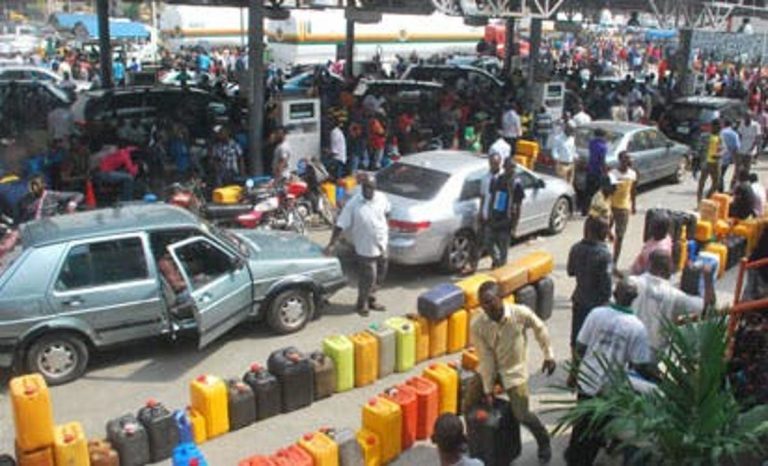
For a continent that imports most of its refined fuels, the increase is not limited to the price of crude. It is compounded by freight, insurance, refining margins and weak currencies. The result is visible at the pump, from Johannesburg to Dakar, via Lagos and Nairobi.
Brent or WTI: the wrong thermometer
For African importers, the only price that matters is Brent, and even more so the quotes for delivered refined products. US WTI is useful only for understanding what is happening elsewhere.
Since the start of the crisis, the two benchmarks have parted ways. Brent reflects seaborne oil, exposed to Gulf routes. WTI is priced at Cushing, in the heart of the US pipeline network, which is barely dependent on Hormuz. Before the war, the spread between the two hovered around $3 to $5 a barrel. On 26 October, it reached $13.50: $115.16 for Brent, $101.67 for WTI.
This explains the contradictory weekly figures in circulation. In the week ending 16 October, WTI jumped by more than 10%, driven by an unexpected US stock draw of 8.6 million barrels and the recovery after hurricane-related disruptions. Brent gained only about 5%. The following week the movement reversed: more than 6% for Brent, less than 2% for WTI, following the Houthi strikes on Saudi Arabia.
The figure of -8.4% for Brent and +13.1% for WTI over one week, repeated here and there, does not correspond to any benchmark close that we have been able to verify. It most likely results from a comparison between two different contract months: the Brent contract rolled from November to December in early October, which distorts week-on-week calculations. In other words, it is not the market that contradicted itself, but the methodology.
On the physical market, the bill is heavier still. Emirati Murban has traded as high as $118, above forward Brent. In Ghana, distributors used an average of nearly $127 a barrel for the mid-October pricing window, well above the forward prices at the time. For an importing country, the barrel displayed on financial screens is therefore a floor, not the price actually paid.
Hormuz explains only part of the bill
The strict Hormuz risk premium weighs less than is commonly thought. It is refining and transport that are driving up the price of a litre delivered in Africa.
First observation: at the end of September, crude flows out of Hormuz had returned to above their pre-war level. Prices did not follow. Barrels are travelling further, on fewer ships, at record rates. A tanker loaded in the Red Sea for Asia now sails around Africa to avoid Bab el-Mandeb: more than 50 days at sea instead of 23.
Second observation: freight rates have multiplied. In early October, a crude tanker was earning on average more than $500,000 a day, ten times the 2025 average. Shipping a barrel from West Africa to Europe cost about $25, more than four times the pre-crisis level. War-risk insurance adds to the bill.
Third observation, and the heaviest: diesel. The gap between the price of diesel and that of crude, the refining margin, usually runs at around $20 to $30 a barrel. It exceeded $100 in September, with a record of $118 in the United States. It fell back to around $60 in Europe in early October, but remains double the norm. The International Energy Agency has explicitly singled out Africa, Europe and Latin America as the markets most exposed to a further rise in delivered diesel.
Doing the maths, the order of magnitude is as follows. Since February, Brent has gained about $48 a barrel. Of that increase, the share attributable to Gulf risk, measured by the widening of the spread with WTI, is about $10. The rest stems from the global tightening of supply. But for a barrel of delivered diesel, the refining margin alone adds $35 to $65 more, and freight several tens of dollars more on the longest routes. The result: for diesel, more than half of the increase does not come from crude. That is why diesel is rising faster than petrol everywhere, and why countries without refineries are paying the highest price.
At the pump: eight countries, eight strategies
In one year, diesel has risen by as much as 65% in South Africa, but by barely 7% in Côte d'Ivoire. The gap says nothing about actual exposure to the shock. It tells us who chose to make consumers pay the price, and who shifted it onto the state budget.
• South Africa. Record high in October: 30.25 rand a litre for 95-octane inland, against 21.63 rand a year earlier (+40%). Wholesale diesel rose from 19.34 to 31.95 rand (+65%). Without intervention, November was set to bring a further increase of 1.50 to 2.30 rand.
• Nigeria. A litre of petrol sells for between 1,355 and 1,435 naira depending on the state, around 1,405 naira in Abuja. Before the war, it was at about 830 naira in part of the country: an increase of about 65%, fully passed through since the end of subsidies in 2023.
• Kenya. Since 15 October, super petrol has been capped at 226.96 shillings in Nairobi and diesel at 227.76 shillings, against 184.52 and 171.47 shillings at the end of 2025. That is +23% for petrol and +33% for diesel. In the north of the country, diesel exceeds 248 shillings.
• Morocco. Diesel is trading at around 15.60 dirhams and petrol at around 15.33 dirhams in mid-October. At the start of 2026, diesel was still below 11 dirhams. The 15-dirham threshold has become the new norm.
• Ghana. Petrol hovers around 16.45 cedis a litre at some distributors, with a floor price set at 16 cedis for petrol and 16.77 cedis for diesel. Fuels have risen by more than a third since January, aggravated by the slide of the cedi.
• Egypt. 95-octane is at 24 pounds, diesel at 20.50 pounds, after an increase of 14% to 17% in March. Over one year, the rise is about 14% for petrol and 17% for diesel. At about $0.45 a litre, the country remains among the cheapest on the continent, at the cost of a considerable budgetary effort.
• Côte d'Ivoire. Super has been capped at 905 FCFA and diesel at 725 FCFA since August, with prices held in September and October. A year earlier: 830 and 675 FCFA. The increase, of 9% for super and 7% for diesel, remains one of the most contained in the region.
• Senegal. Super petrol is at 990 FCFA and diesel at 755 FCFA since 15 August. These are exactly the prices from before the December 2025 cut: over one year, Senegalese consumers have seen virtually no increase. The real cost of diesel is nonetheless estimated at 1,044 FCFA a litre.
The contrast is striking. Countries with liberalised prices, such as Nigeria and South Africa, show the biggest increases. Countries with administered prices, such as Côte d'Ivoire, Senegal and Egypt, have cushioned the shock, but the bill has not disappeared: it has changed payer.
Subsidies and tax cuts: who signs the cheque?
No government has found new money to protect its motorists. All have drawn on existing reserves, given up revenue or shifted the burden onto third parties.
South Africa: 27 billion rand over the year
Finance Minister Enoch Godongwana announced on 21 October a temporary cut in the general fuel levy. From 4 November to 1 December, it falls by 3 rand a litre on diesel and 1.50 rand on petrol. From 1 December to 5 January 2027, the relief drops to 1.50 rand on diesel and 1 rand on petrol.
Cost: 10 billion rand in lost revenue. The financing is clever. A revenue surplus from the 2025-2026 fiscal year had been paid into the Central Energy Fund. That 10 billion is returning to the Treasury and being set aside as a reserve to offset the shortfall. The budget therefore does not take on more debt, but the Fund loses a cushion that could have been useful later.
This is the second such operation this year. From April to June, a first cut had already cost 17 billion rand, with no offset. The total therefore reaches 27 billion. The timing also raises questions: the cut takes effect on the day of the local elections. And it risks being partly wiped out by the increase expected in November on petrol.
Nigeria: no subsidy, but stopgaps
The government refuses to return to the subsidy regime abolished in 2023. According to the finance minister, returning to pre-reform prices would cost more than 20,000 billion naira a year. On 8 October, he presented ten measures. The national oil company NNPC is waiving its margin and selling petrol at cost for 30 days. A discount of 66 naira a litre is granted until 31 October to customers paying via its app. A cap of 1,350 naira a litre on the cost price of petrol is under consideration, to be reviewed monthly.
Funding relies on a windfall tax on energy operators. Its proceeds are meant to pay for transport assistance and vouchers for urban minimum-wage workers. The opposition sees a subsidy in all but name, ahead of the presidential election. In reality, it is NNPC, and therefore indirectly the state as shareholder, that absorbs the difference.
Egypt: a freeze paid for with debt
The automatic pricing committee held prices on 15 October, until the end of December. The state pays the difference. Yet the 2026-2027 budget was built on a barrel at $75 and cut the fuel subsidy envelope to about 16 billion pounds, against 75 billion the previous year. With Brent at $115, the gap is yawning. It is being filled by the deficit, in a country committed to the IMF to eliminate these subsidies under an $8 billion programme running until 15 December. A new increase looks unavoidable early next year.
The others: Senegal, Angola, Ghana, Kenya
Senegal has spent more than 245 billion FCFA on subsidies in the downstream sector alone since January. Maintaining the old prices would have cost an additional 47 billion in a single month. Angola, despite being a producer, is seeing its subsidy bill double to 3,800 billion kwanzas, about $4.2 billion. Ghana has introduced assistance of 2 cedis a litre of diesel. Kenya has cut VAT on fuels to 8%, and Morocco has increased its aid to road hauliers.
Winners and losers: the great divide
The real African winner of the crisis is not a producer state. It is a refiner.
Dangote, the unexpected champion
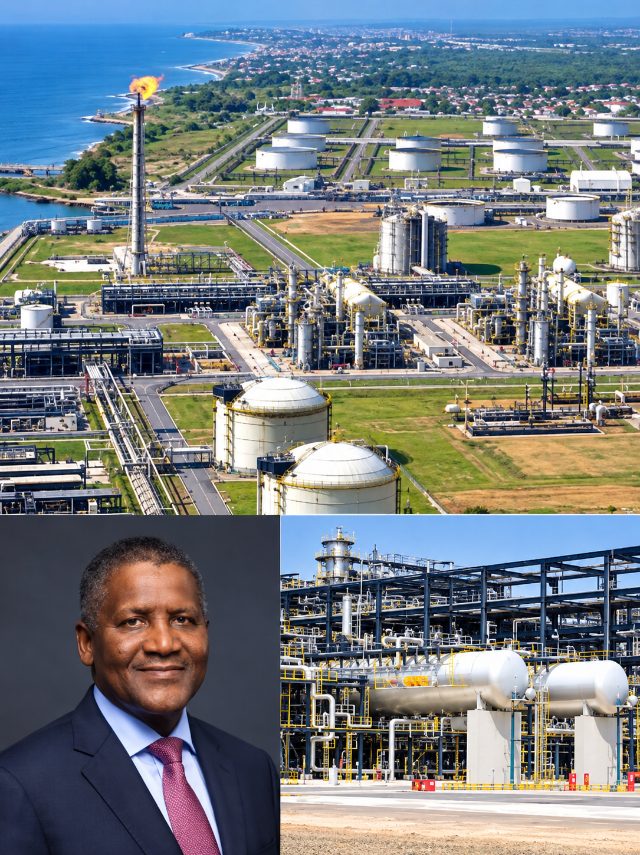
The Lekki refinery reports a net profit of $4.73 billion for the first nine months of 2026, against a loss of $117 million a year earlier. Its revenue more than doubled, to $22.5 billion. Its refining margin almost doubled, from $13.70 a barrel in 2025 to $24.50 in the first half of 2026.
The war has opened up new outlets. During the crisis, Dangote became Europe's leading supplier of jet fuel. Its diesel exports rose by 23%, to about 48,000 barrels a day, to West Africa and Europe. The group chose this moment to launch the biggest initial public offering in African history, of about $1.6 billion. The paradox is total: the Nigerian refiner is prospering thanks to the very refining margin that is hurting the continent's motorists.
Producers: a windfall quickly spent
Angola built its 2026 budget on a barrel at $61. With Brent at around $112 on 22 October, the gap exceeds $50 a barrel. The country has overtaken Kenya as Africa's sixth-largest economy. But the windfall is melting fast: the subsidy bill is doubling, debt service was already absorbing nearly half of the initial budget, and Luanda still raised $4 billion in Eurobonds this year.
Nigeria adopted a benchmark price of $60 to $65 a barrel. The revenue surplus could amount to tens of trillions of naira depending on how long the conflict lasts. But the fall of the naira, imported inflation and the cost of emergency measures are eating up a good part of it. With elections approaching, most of these gains risk being spent rather than saved.
Importers: debt lying in wait
For importing countries, the shock acts like a sudden tax on national income. Kenya illustrates the spiral. Its public debt stands at about 67.6% of GDP, and demand for dollars to import fuel has jumped by at least 30%. The country is rated at high risk of debt distress. Tanzania's import bill is swelling, while Zambia and Namibia have signed exclusive supply contracts with an international trader.
Economists now cite Senegal, Malawi and Mozambique among possible default candidates in 2027. For a 50% rise in oil, Mauritania's import bill would increase by 7.3% of GDP, The Gambia's by 6.3% and Burkina Faso's by 5%. It is these countries, and not the most visible ones, that pay the heaviest bill relative to the size of their economies.
Strategic reserves: Africa lives hand to mouth
Most African countries hold only 15 to 25 days of fuel, far from the international benchmark of 90 days. In the event of a prolonged supply disruption, shortages would hit even before prices soar.
• South Africa. The country holds 6.9 million barrels of strategic crude, or about 30 days of refinery throughput according to the minister. But its two major refineries closed in 2022, and relative to its total consumption of liquid fuels, this stock would cover only about twelve days. A draft published in July provides for 60 days of state reserves, 70% of it in crude, plus 21 mandatory days for distributors: 81 days in total, meaning a stock to be increased fivefold. Each day without fuel would cost the economy about one billion rand.
• Nigeria. The law requires 30 days of stock. For petrol, coverage fell from 33 days in January to 16 days in May, before recovering towards 20 days in June. The petroleum law nonetheless authorises a national strategic stock of up to 60 days. The government says it is investing in this reserve, but it does not yet exist.
• Kenya. The country has no strategic reserve, although the 2019 law requires 90 days. Importers are only required to keep 21 days of operational stock. At the end of March, the country had only 16 days of petrol and 19 days of diesel, and stations rationed supplies. Nairobi is now seeking to involve the private sector in building capacity.
• Ghana. The regulator says it has more than five weeks of fuel in reserve.
• Côte d'Ivoire. National storage capacity for liquid products exceeds 471,000 m³, held almost 85% by GESTOCI. Relative to consumption of about 3.2 million m³ a year, it represents a little over 50 days, if the tanks are full. Butane gas has only about fifteen days. In July, a new 20,000 m³ diesel tank and a loading facility at source were commissioned in Yamoussoukro, as part of a strategy aimed at making the country a regional oil hub and raising loading capacity from 650 to 1,800 trucks a day by 2030.
The lesson is clear: stocks do not bring prices down, but they buy time. And in a crisis that has lasted eight months, time is worth its weight in gold.
What the shock reveals
In the end, the bill is split three ways. In liberalised markets, the consumer pays everything, immediately. In administered markets, the state pays in their place, by widening its deficit or draining its reserves. And everywhere, tomorrow's taxpayer inherits a growing debt.
The crisis also exposes an uncomfortable truth: Africa suffers less from the price of crude than from its inability to refine and store it. A continent that produces oil but imports its diesel pays twice, at the global price and at the refiner's margin. Dangote is proof by example: whoever refines, collects; whoever imports, borrows.
The coming weeks will be decisive. Egypt will have to decide in January, once the price freeze expires. South Africa will see its fuel tax relief expire on 5 January. Nigeria must set its monthly price cap as the presidential election approaches. And if the diesel margin picks up again, as the International Energy Agency fears, Africa will once again be on the front line.
Energy sovereignty cannot be decreed at the pump. It is built in refineries, storage tanks and the financial arrangements that make it possible to build them.
The free Gisement newsletter
Every morning, Africa’s mining, oil and energy headlines in your inbox.
Comments
To comment, please use the French edition of this article.