
IndustrialisationAnalysis
Lithium: Namibia says no to raw ore, but not yet yes to industry
Since June 2023, Windhoek has banned exports of unprocessed lithium ore. More than three years on, the record is mixed: concentration plants, no refinery, a law still awaited and a high-profile court dispute. A look at a "no" that is more political than legal.
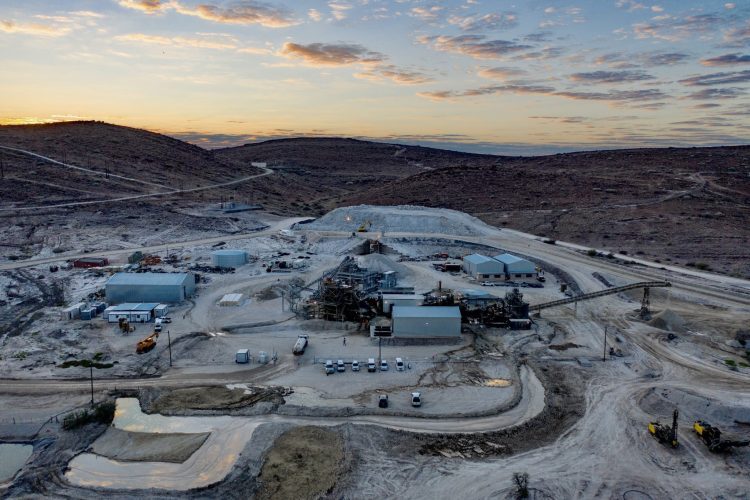
The phrase has gone viral: Namibia says "no" to raw lithium. It has the merit of clarity. Yet it obscures what matters most: what the measure actually says, and what it has produced on the ground.
A Cabinet decision, not a law
On 6 June 2023, Namibia's Cabinet approved a ban on exporting several unprocessed critical minerals. The list includes crushed lithium ore, cobalt, manganese, graphite and rare earths. The announcement was made two days later, in a simple government statement.
No date of entry into force was specified at the time. A safety valve was built in: small quantities may leave the country, with the discretionary authorisation of the Minister of Mines, notably for metallurgical testing.
The scope is decisive. The measure targets raw ore, not lithium in general. Concentrate, the first stage of processing, can still be exported. Namibia is therefore not refusing to sell its lithium: it requires that it leave its territory in upgraded form.
Windhoek is thus aligning itself with neighbouring Zimbabwe, which as early as December 2022 banned exports of lithium ore and allowed only concentrates.
A law still awaited
To set this policy in stone, the government is preparing a new Minerals Bill, intended to replace the 1992 mining law. The versions discussed since 2024 provide for at least 5% Namibian participation in mining companies. They also reserve a share of output for local processing and raise the royalty cap from 5% to 10%.
The timetable has slipped. Postponed to late 2025, the text was still announced in February 2026 for "the coming months" by Mines Commissioner Isabella Chirchir. It had still not been enacted by the end of the summer.
In September 2026, President Netumbo Nandi-Ndaitwah hardened her tone: partnerships with local players will be enshrined in law. The government subsequently clarified that no participation threshold had been fixed and that stakeholders would be consulted.
The target is set out in figures: raise the share of processed mineral exports from 46.6% to 57% by 2030. A national critical raw materials strategy is being prepared with the European Union.
Concentration plants, no refinery
On the ground, the ban has indeed pushed operators to invest. But only in the first link of the chain.
At Uis, in the Erongo region, Andrada Mining operates a tin mine rich in lithium and tantalum. The group is building a lithium concentrate circuit integrated into its existing plant. Chile's SQM, the world's second-largest producer, has committed to investing up to $40 million to take up to 50% of the Lithium Ridge project. In February 2026, the European Investment Bank (EIB) provided up to €2 million in technical assistance to speed up the feasibility study.
The project is a serious one. It nonetheless remains at the concentrate stage. No lithium carbonate or hydroxide production unit, the products bought by battery makers, has reached an advanced stage in Namibia.
Yet that is where most of the value lies. Refining requires cheap electricity, water, chemical reagents and large volumes. China currently accounts for between 60% and 70% of it worldwide. With around 230,000 tonnes of reserves, Namibia accounts for around 1% of global lithium production.
Xinfeng, the flagship plant turned legal dispute
The other showcase of Namibian policy tells a murkier story. A subsidiary of China's Tangshan Xinfeng, Xinfeng Investments shipped some 75,000 tonnes of ore to China, officially for testing aimed at designing a local plant.
In October 2023, the Mines Commissioner ordered police to stop its trucks on their way to the port of Walvis Bay. The company then announced an investment of 600 million Namibian dollars in a dense media separation plant at Uis. It now claims to have invested 800 million. At the end of 2024, the ministry accused it of mining beyond the scope of its licence, which its management acknowledged.
On 10 September 2026, police sealed off the plant, containers and trucks. The authorities suspect an attempt to move the assets, with some trucks already having set off for Nigeria. The High Court ordered the seals to be lifted.
A few weeks later, in early October, the same court annulled Xinfeng's mining licence. Judge Thomas Masuku found that the original application contained misleading information. The plant presented as proof of the ban's success now finds itself in legal limbo.
Cautious investors
The hesitations are real. Australia's Prospect Resources has frozen its Omaruru project and is now considering takeover offers. Lepidico, owner of the Karibib project, was placed in liquidation in mid-2025. That deposit is also weighed down by disputes inherited from a first ore shipment sent out in 2018.
The ban is nonetheless not the main culprit. The lithium price collapsed in 2024 and early 2025, drying up funding for new projects on every continent.
But Namibia's environment does not help. According to industry analysts, corporate tax stands at 37.5% and industrial electricity costs 35% to 40% more than the regional average. Legal uncertainty even led the US Geological Survey to temporarily remove Namibia from its mining production estimates.
The Chamber of Mines supports local processing, on one condition: that it remains profitable in the face of global competition. The country is not without appeal, however. It has nearly 600 active exploration licences, and the arrival of both SQM and the EIB shows that serious capital has not fled.
Washington courts, Windhoek sets conditions
The geopolitical context gives the measure a new resonance. In February 2026, the United States launched Project Vault, a strategic critical minerals reserve backed by up to $10 billion in Exim Bank financing. Ambassador John Giordano, who arrived in Windhoek in October 2025, has placed energy and critical minerals at the heart of his mandate.
Namibian lithium is not, however, Washington's first target. The United States looks first at uranium, of which Namibia is the world's third-largest producer, and at heavy rare earths such as dysprosium and terbium.
President Nandi-Ndaitwah has set the rules of the game, valid for all partners: minerals must be processed locally, and any cooperation must rest on mutual benefit. Americans, Europeans and Chinese have been warned. Access to Namibian resources will go through plants in Namibia.
Necessary, but not sufficient
In three years, the ban has moved Namibia from a raw ore export model to a concentrate export model. That is real progress, but modest set against the promise of a battery industry.
Taking the next step requires levers that no official statement can provide on its own:
• competitive electricity, which solar power and green hydrogen could provide;
• regional scale, with Zimbabwe, which itself banned all exports of raw minerals in February 2026;
• guaranteed offtake agreements with buyers of refined products;
• stable rules and a tax regime that rewards processing.
Three signals will show whether Windhoek's "no" becomes a "yes" to industry: the enactment of the Minerals Bill, the legal fate of the Xinfeng plant and a final investment decision by Andrada and SQM at Uis. Until then, Namibia has won the battle of principle. The battle of the plants has yet to be delivered.
The free Gisement newsletter
Every morning, Africa’s mining, oil and energy headlines in your inbox.
Comments
To comment, please use the French edition of this article.