
Mining and mineralsInvestigation
Mining: Tanzania calls on Africa to finance its own subsoil
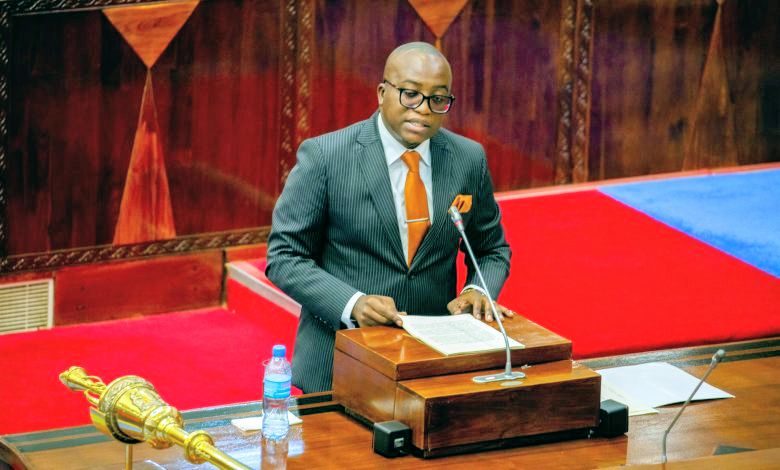
In Accra, Tanzania's Minister of Minerals, Anthony Mavunde, urged African countries to fund their mining sectors from their own revenues, from exploration to refining. He pointed to one example: 10% of his country's mining revenues devoted to geological mapping. The message is a strong one.
Africa holds a large share of the planet's mineral resources, but it rarely finances their discovery itself. Exploration remains the preserve of foreign juniors, donors and major groups. Dodoma wants to reverse that logic.
The Accra appeal
On 20 October 2026, the Mining in Motion 2026 conference brought together mining-sector decision-makers and investors in Accra. Anthony Mavunde chaired a ministerial session devoted to mining finance, “from exploration to refining”.
His message can be summed up in one sentence: African countries must finance the exploration, processing and refining of their minerals with their own revenues, rather than with foreign aid. For the minister, dependence on donors is a structural brake on the continent's industrialisation.
On the same platform, Ghana's Minister of Lands and Natural Resources, Emmanuel Armah-Kofi Buah, argued for closer partnerships. He pointed to three obstacles: lack of capital, infrastructure deficits and energy constraints.
10% of revenues for geology
To support his case, Anthony Mavunde cited a decision by President Samia Suluhu Hassan: 10% of Tanzania's mining-sector revenues are earmarked for detailed geological exploration. The minister sees it as an important step towards ending dependence on donors.
The need is real. According to him, only about 16% of Tanzanian territory has been the subject of detailed geological surveys. In other words, more than four-fifths of the subsoil remains poorly known, and therefore hard to showcase to investors.
Several questions remain without a public answer. What legal text underpins this allocation? How much does it amount to each year, and how much has already been disbursed? What geological coverage target is there, and by when? Until these figures are published, the measure is more a political commitment than proof.
From exploration to refining, the highest step
The minister does not stop at geology. He argues for extending this domestic financing to processing and refining, where value added is concentrated.
He also highlights Tanzania's local content framework. It requires mines to source more from national companies, so that operating expenditure benefits the country's economy.
But the gap in scale is considerable. Financing geological surveys costs a few million dollars. A refinery or processing plant requires hundreds of millions, along with reliable and inexpensive energy. This is precisely the area in which the Ghanaian minister pointed to the continent's limits.
Minerals are still waiting for their bank
Africa is beginning to build its own financial instruments, but not for minerals. On 31 October 2026, the African Energy Bank was launched in Abuja. It is backed by the African Petroleum Producers Organization (APPO), which has 18 member countries, and by Afreximbank.
Endowed with $5 billion in authorised capital and headed by Helmy Ghazi, it covers the entire oil and gas chain, from exploration to distribution. Solid minerals fall outside its mandate.
Meanwhile, external capital continues to occupy the field. The Appian fund is reported to have deployed about 70% of an initial $100 million commitment from the International Finance Corporation (IFC), the World Bank's private-sector arm. Its targets include Asante Gold in Ghana and Omico Copper in Namibia.
Revenues that leak away
Financing one's mines from one's revenues first requires collecting them. Yet part of them escapes states. According to the NGO Global Initiative Against Transnational Organized Crime, around 405 tonnes of African gold exported to the United Arab Emirates in 2022, or 66.5% of the total, came from smuggling.
Cameroon offers a striking illustration. According to its national mining company, Dubai received 44 tonnes of Cameroonian gold between 2021 and 2025, against 148 kilos of declared exports. The shortfall for the state is put at nearly 2,000 billion CFA francs.
The question also arises for public stakes in mining projects. According to the consultancy Development Reimagined, Tanzania holds at least a 16% free-carried interest and receives a 3% royalty in Peak Rare Earths' rare earths project. But of 32 African projects backed by Chinese capital, no technology transfer clause is said to have been made public.
What Dodoma will have to prove
Anthony Mavunde's plea makes clear that a country that does not know its subsoil negotiates from a position of weakness, and one that has others map it hands them the advantage of information.
To convince beyond the conference platforms, however, Tanzania will have to make its model verifiable:
• publish the text and the amounts of the 10% allocation;
• show the geological surveys actually carried out with these funds;
• specify what its stakes in mining projects really bring in;
• involve its own financial institutions in financing processing.
Africa now has a bank for its oil and gas. For its minerals, it still has only a speech. Putting it to the test of the figures will be the real test of the Accra appeal.
The free Gisement newsletter
Every morning, Africa’s mining, oil and energy headlines in your inbox.
Comments
To comment, please use the French edition of this article.